
The Badlands reward both slow scenic driving and time on foot, so you do not need a demanding hiking schedule to appreciate the park. In two or three days, you can explore the main overlooks, walk among eroded formations, and watch prairie wildlife without racing between stops. Build your plans around daylight, heat, and changing weather, with an indoor break or shorter outing ready when conditions shift.
Drive Badlands Loop Road and Linger at Overlooks
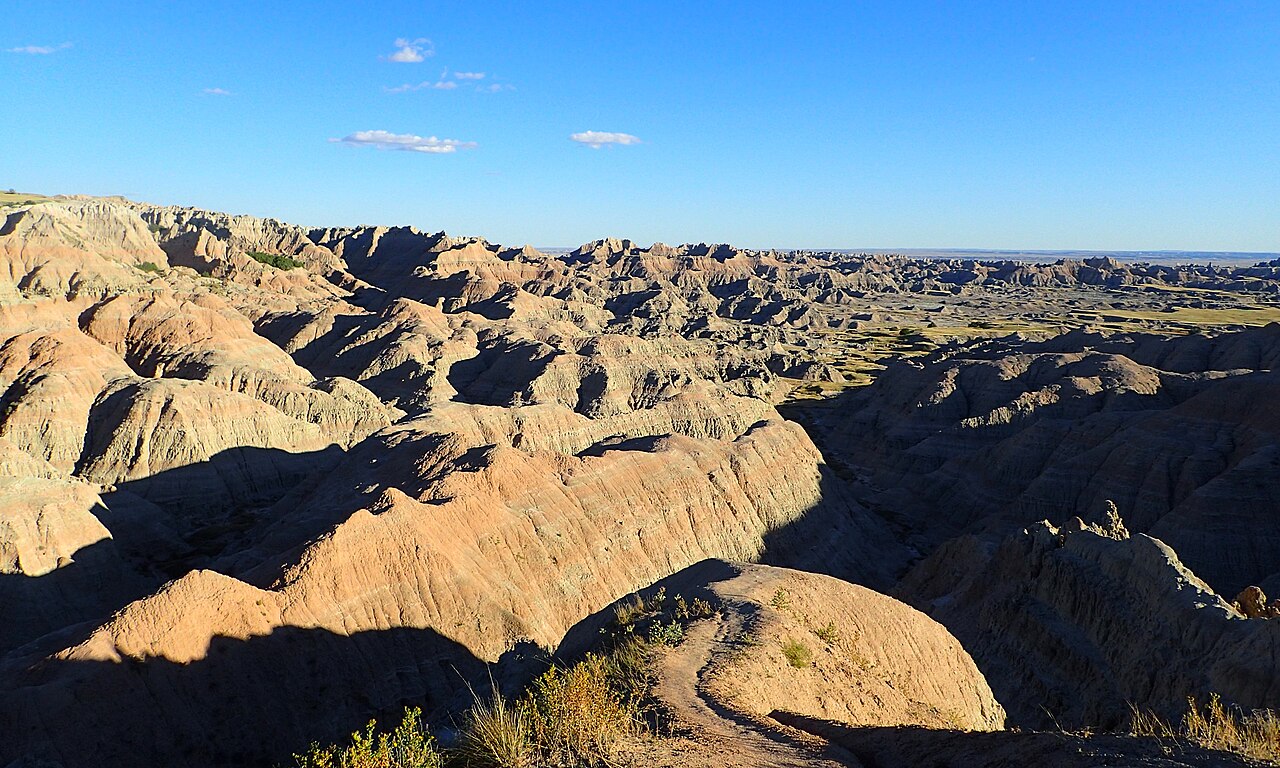
Badlands Loop Road, also known as South Dakota Highway 240, is the backbone of a first visit. Rather than treating it as a quick drive-through, allow time for several overlooks and one or two short walks. Big Badlands Overlook, Panorama Point, and Pinnacles Overlook offer different perspectives on the park’s eroded walls, buttes, and prairie.
Morning and late-afternoon light bring out texture that can flatten under the midday sun. Use designated pullouts, keep traffic lanes clear, and resist stopping abruptly for wildlife. For RV travelers, a smaller selection of comfortable parking stops is often more enjoyable than trying to pull into every overlook. Check NPS alerts for current road conditions before starting.
Choose a Hike That Fits the Weather and Your Group
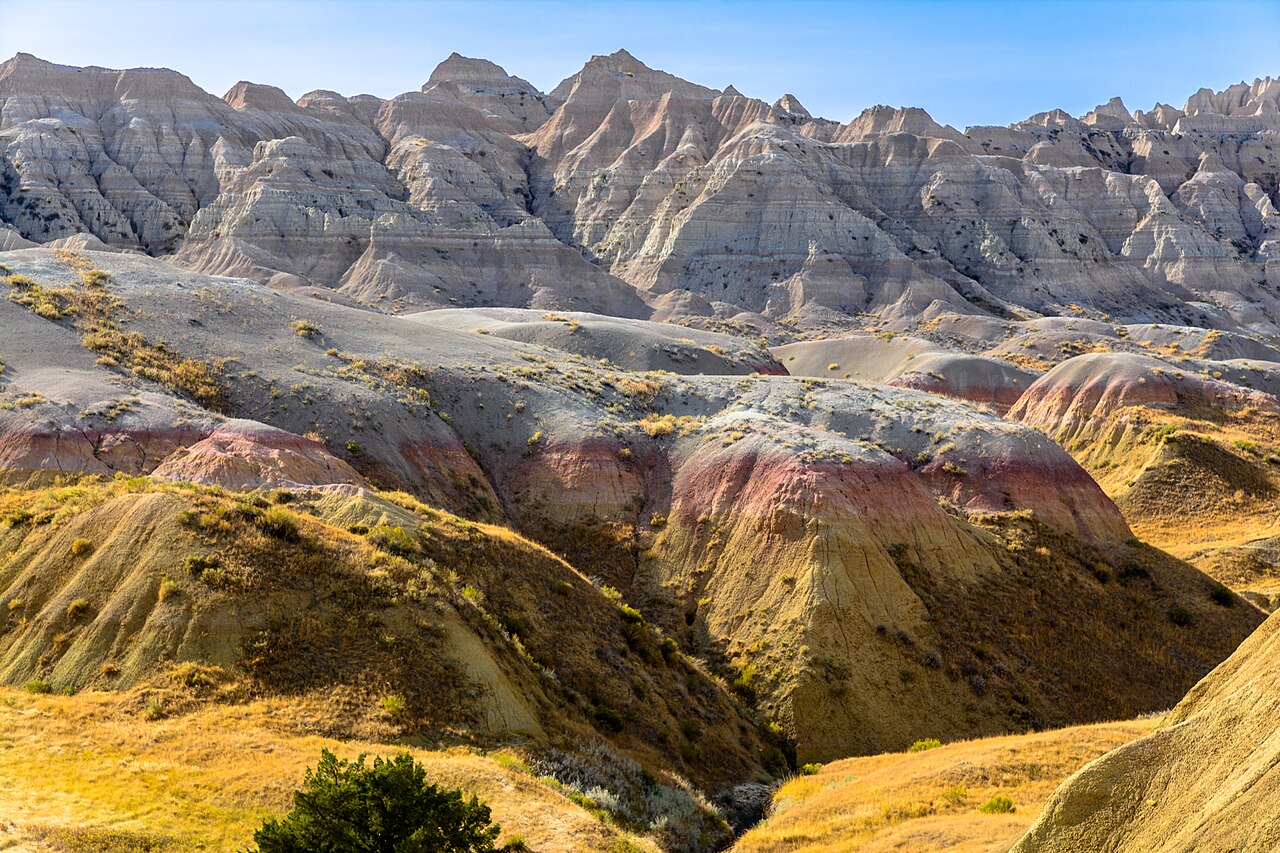
The Door and Window trails are approachable starting points for seeing the formations up close. The Fossil Exhibit Trail pairs a short boardwalk outing with information about ancient life in the region. For a more adventurous option, the Notch Trail includes a ladder and exposed sections; it is not the right choice for everyone, especially anyone uncomfortable with heights.
The Castle Trail offers a longer outing across open terrain, while Saddle Pass involves a steep climb. Match your route to the day’s temperature, footing, and available daylight rather than mileage alone. Carry water, wear grippy footwear, and turn around when conditions warrant. Check official trail descriptions and closures before committing to a route.
Watch Prairie Wildlife from a Respectful Distance
Bison, bighorn sheep, prairie dogs, and a variety of birds make wildlife watching a worthwhile part of a Badlands visit. Scan the prairie as carefully as the rock formations, especially during the cooler parts of the day. Bring binoculars so you can enjoy animals without approaching them, and never feed wildlife or block an animal’s path.
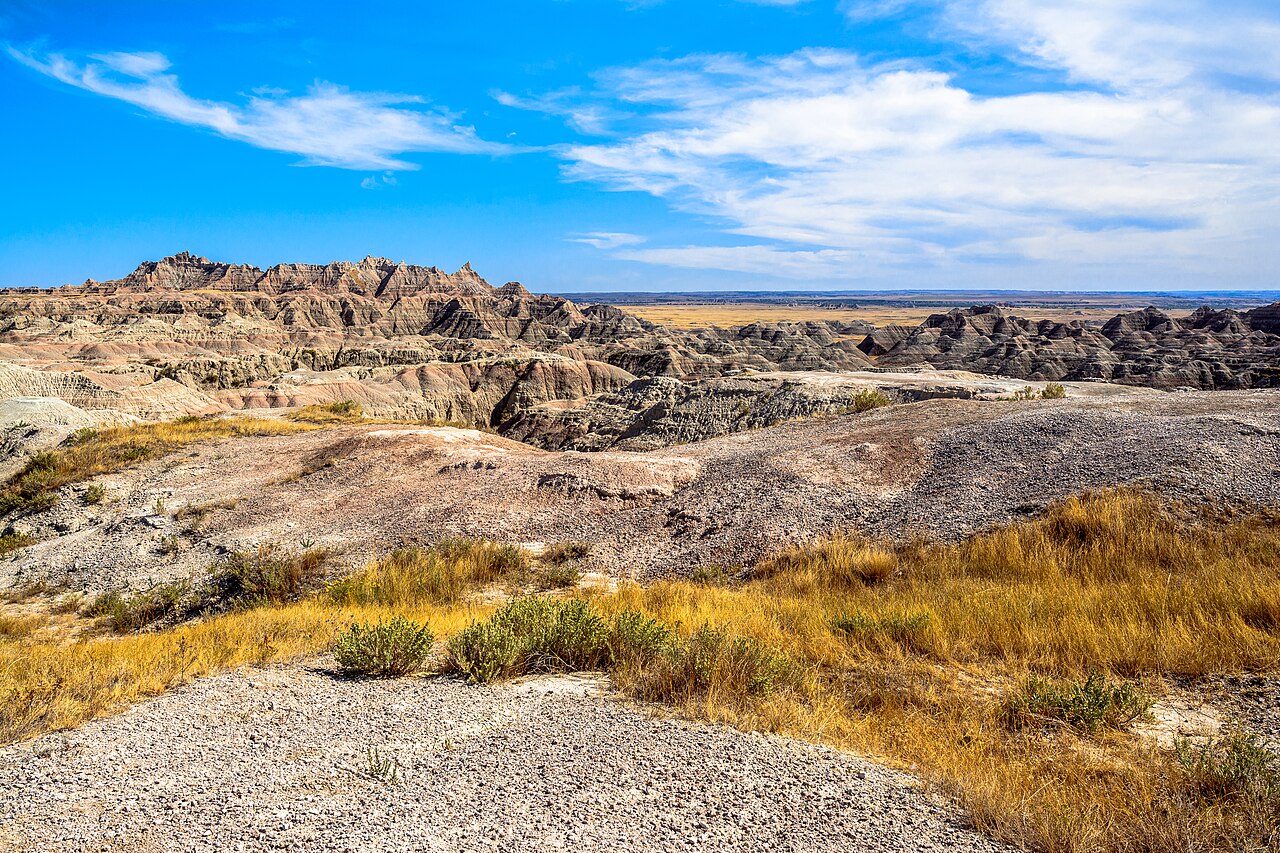
Sage Creek Rim Road is a well-known area for prairie scenery and wildlife viewing, but its unpaved surface makes current conditions important. Check road status, weather, and rental-vehicle restrictions before using it. Stay well back from bison and other large animals, and give them room to cross roads. Sightings depend on animal movement, so treat them as a bonus rather than a scheduled stop.
Keep Family Days Short, Varied, and Curious
With kids, alternate one short trail with an overlook, snack break, or visitor center stop. The Window Trail and Fossil Exhibit Trail can fit a lighter schedule, while the Door Trail lets families choose how far to continue beyond its boardwalk. Closely supervise children around drop-offs and uneven terrain, and do not assume a short route is automatically suitable for a stroller.
Ask at the Ben Reifel Visitor Center about Junior Ranger materials and current ranger programs. A simple wildlife checklist or sketchbook can make drive time more engaging. Explain that fossils and other natural objects must stay where they are; report an interesting fossil find to a ranger instead of collecting it.
Use Rainy or Stormy Periods for Indoor Learning
The Ben Reifel Visitor Center is a useful first stop when rain or excessive heat changes your plans. Exhibits introduce the park’s geology, fossils, and ecology, helping the landscape make more sense when you return outside. Check the official NPS site for current visitor center hours and program availability rather than assuming services match your travel schedule.
Light rain may still allow a scenic drive if visibility and road conditions are good, but thunderstorms, flooding, ice, or heavy rain call for a more cautious approach. Avoid muddy trails and unpaved roads when conditions deteriorate. The Badlands are not a swimming destination, so think of wet weather as a reason to learn, rest, or adjust your route.